
Creator marketing didn't start out as a performance channel. It started as a way to borrow someone else's audience for an afternoon, post a product photo, and hope some of that goodwill rubbed off on the brand. That version of influencer marketing is still around, but it's no longer where the money is going. Brands are increasingly treating creators the way they treat search ads or paid social: as a channel that has to prove itself with numbers, not just good vibes. Influencer Advantage, a creator-led performance marketing company, has built its entire business around that exact shift, treating creators less like a favor to ask for and more like a channel that has to earn its budget.
The Old Model: Influence Without Accountability
For most of the last decade, a "successful" influencer campaign meant a nice post with decent engagement. Nobody asked too many hard questions about what happened after someone scrolled past it. That loose standard survived mostly because the dollar amounts involved were small enough to treat as an experiment rather than a real line item. According to Forbes, brands now earn roughly $5.78 back for every dollar spent on influencer marketing, yet close to 30% still don't formally track that return, a holdover from the years when nobody expected precise numbers from this part of the budget in the first place.
What Changed: Attribution Became Possible
The shift from influence to acquisition really comes down to attribution. Once a brand can connect a specific post, link, or promo code to an actual sale, a creator campaign stops being a vague brand-awareness exercise and starts behaving like any other measurable marketing channel. A Sprout Social report on how brands benchmark creator performance found that marketers increasingly combine engagement data with real traffic numbers when judging whether a partnership worked, rather than relying on engagement alone the way most brands did just a few years ago. That combination is what makes the word "performance" mean something concrete instead of something aspirational.
Influencer Advantage as a Case Study in the New Model
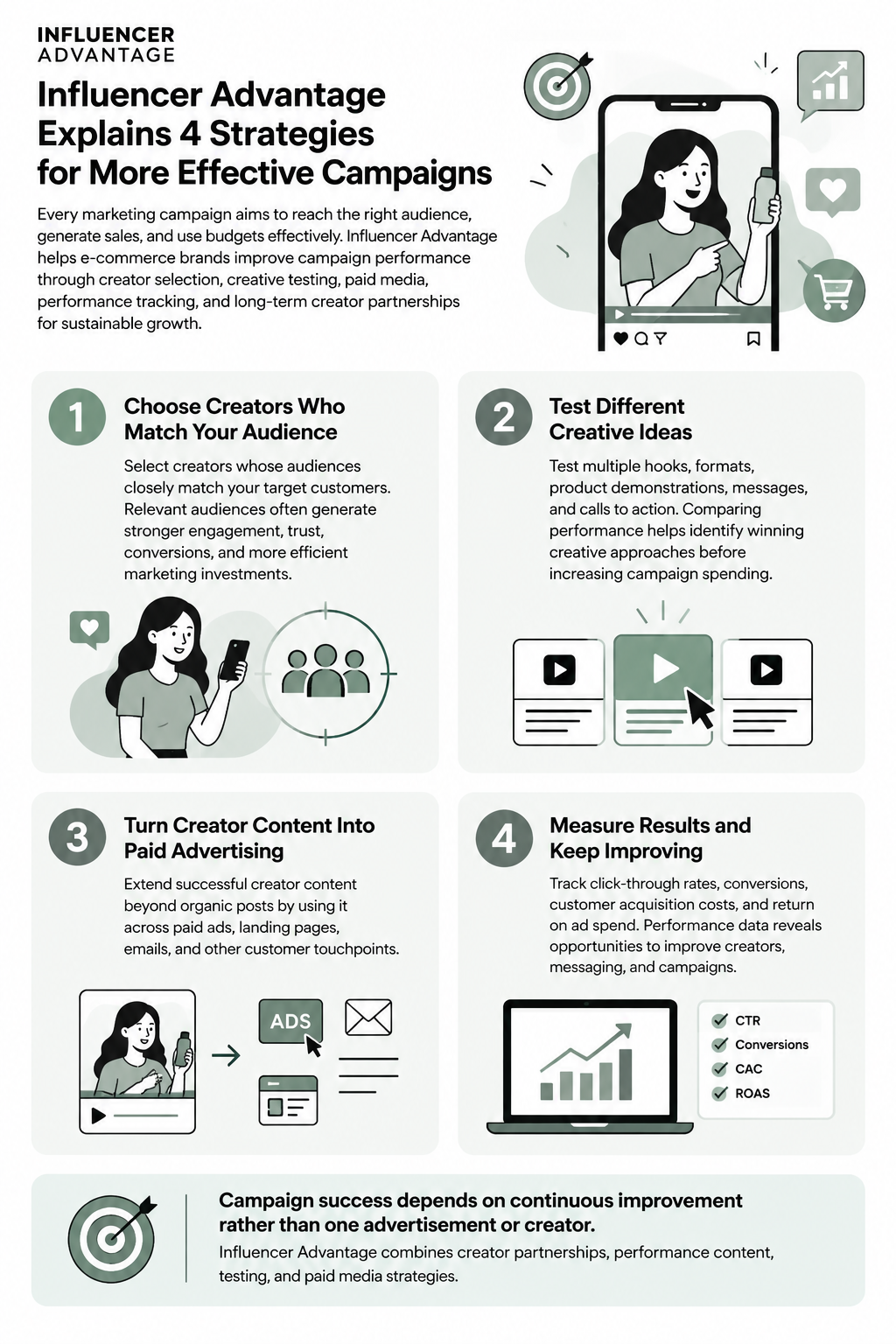
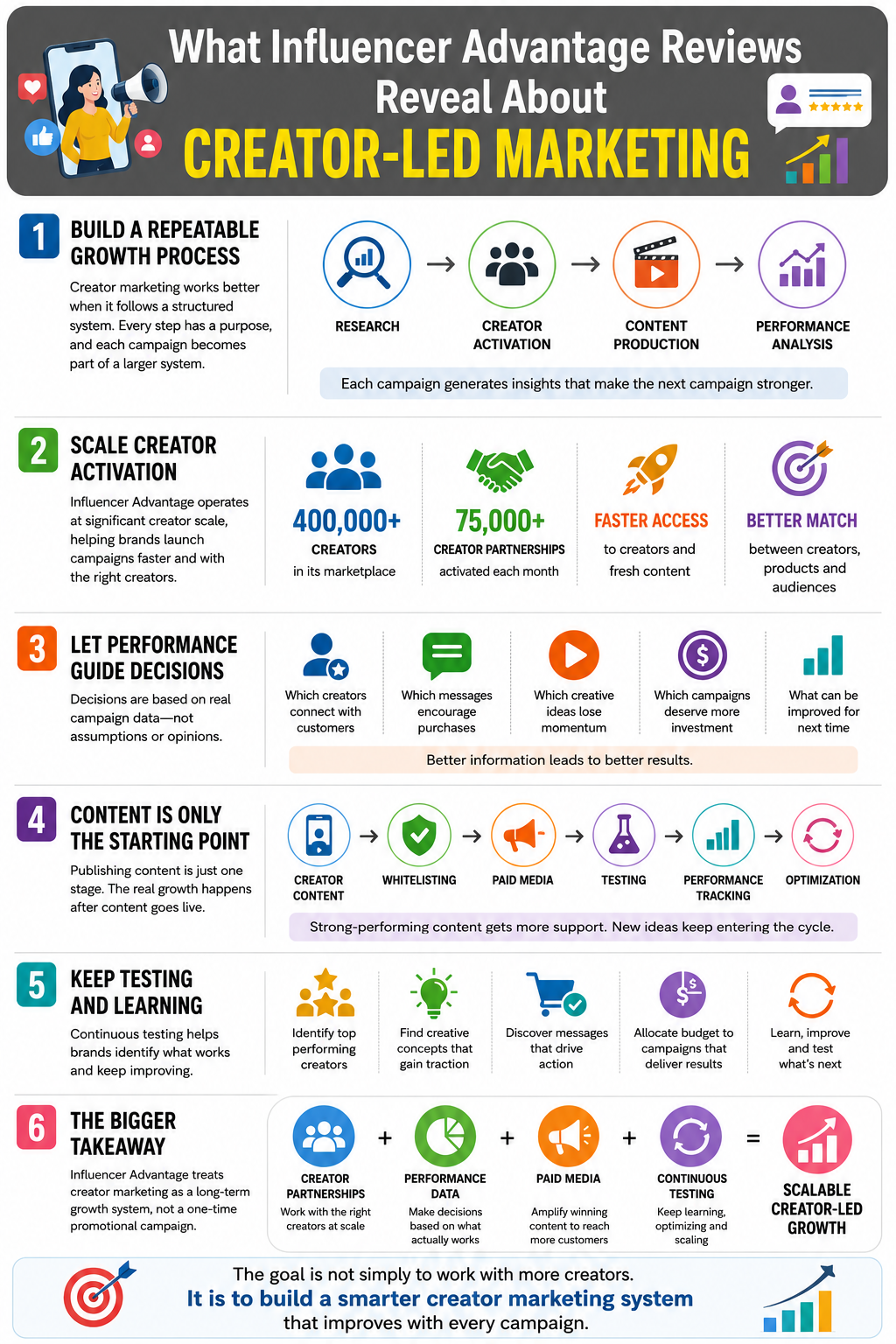
Influencer Advantage is a useful example of what this shift looks like once it's fully built out. The company works with more than 700 active brands and manages upward of $850 million in annual advertising spend, all organized around creator partnerships rather than traditional media buys. It activates roughly 75,000 creator partnerships every month and produces more than 200,000 pieces of performance-focused content in that same window. None of that scale would be worth much without a way to track outcomes, which is exactly the point: Influencer Advantage treats creator content as an acquisition tool first, with brand awareness as a welcome side effect rather than the actual goal being chased.
Testing Replaces the Single Big Bet
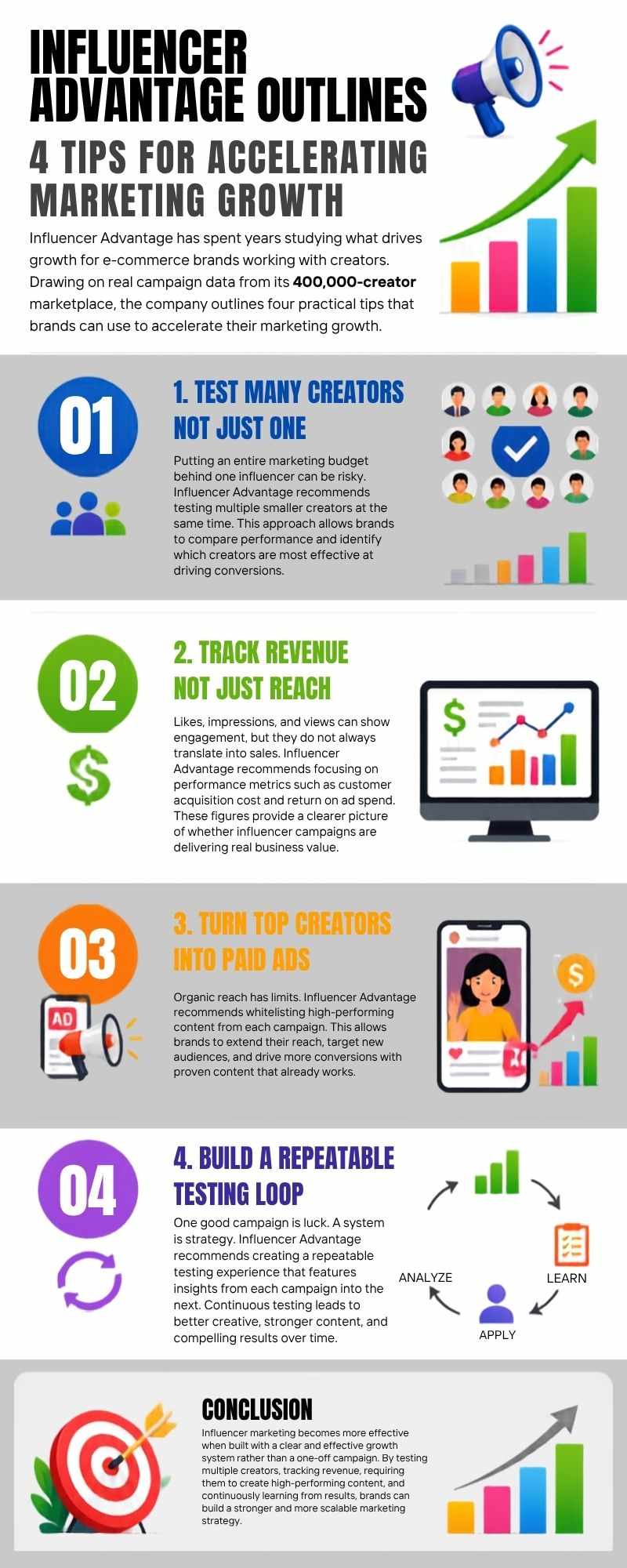
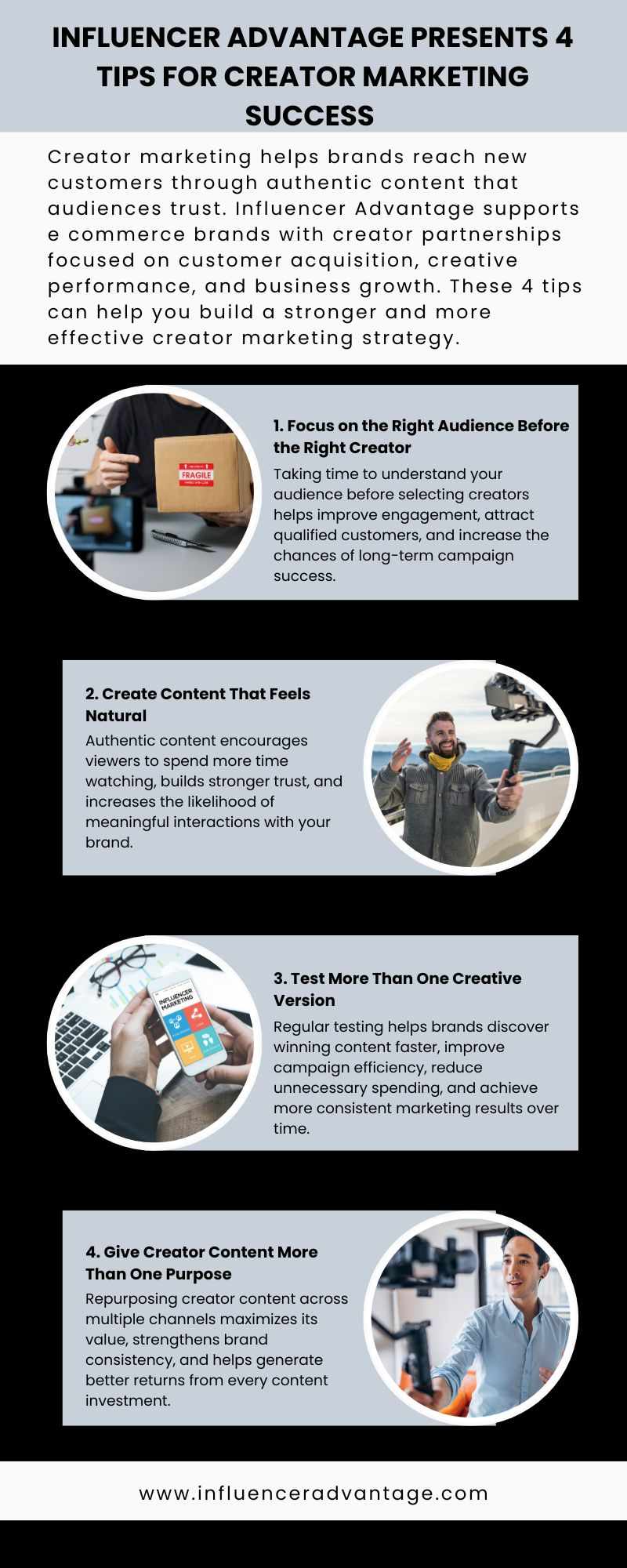
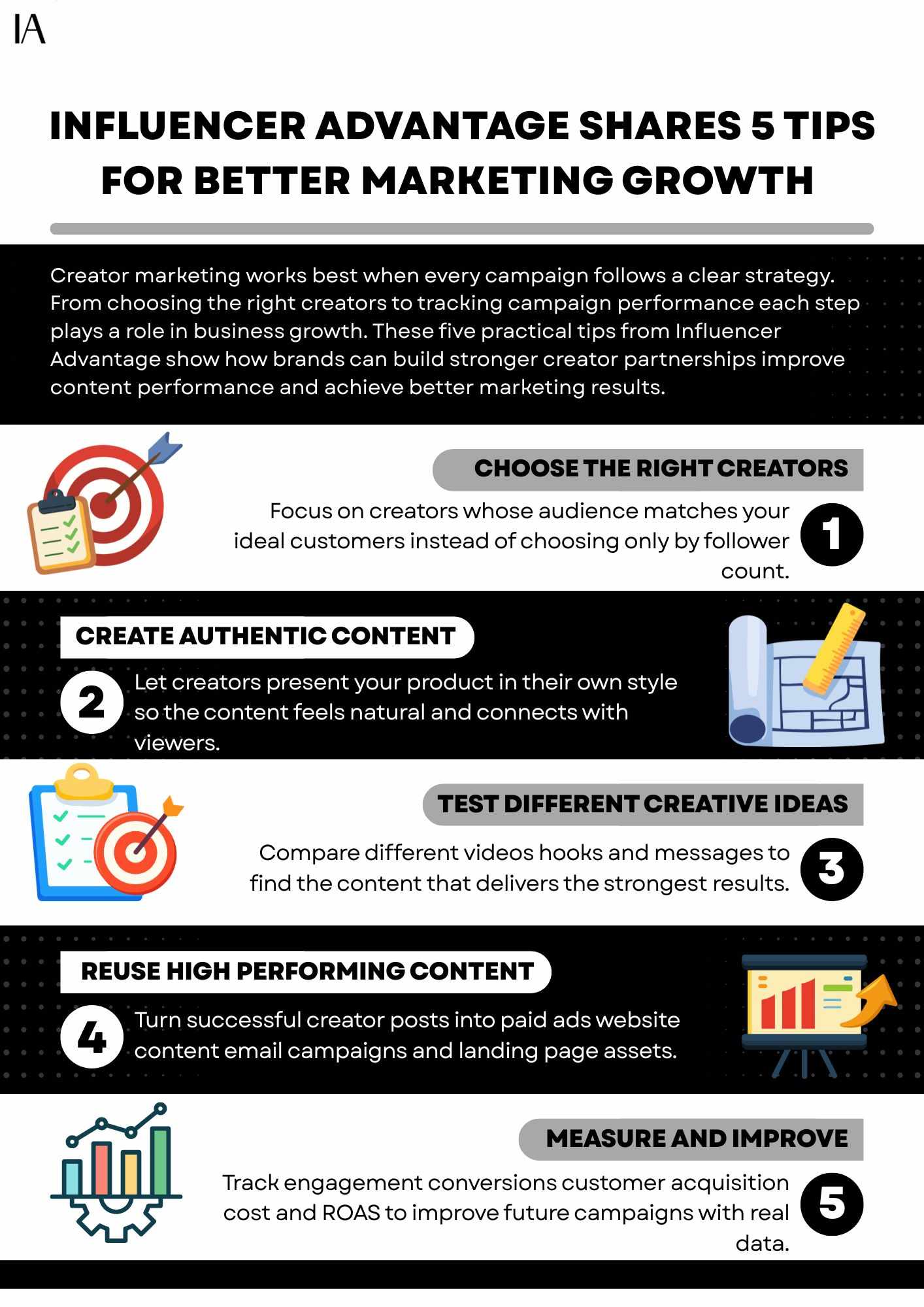
One of the clearest signs of this shift is how brands choose creators in the first place. The old approach was to find one influential person and build an entire campaign around them. The newer approach spreads a budget across many smaller creators and tests which messages and formats actually convert. Influencer Advantage builds its programs this way deliberately, running diversified campaigns instead of concentrating spend on a handful of big names. GRIN, whose own creator network includes more than 700,000 verified creators, has made a similar point: a marketplace of real size gives brands access to nearly every niche and content style, which only matters if a brand is actually testing across that variety instead of picking one creator and stopping there.
The Rest of the Industry Is Moving the Same Way
This isn't a shift unique to one company. Ahrefs reported similar lessons after spending more than a million dollars sponsoring creators itself, finding that ongoing relationships and careful creator selection mattered more to results than any single high-reach post. That's a strange thing for a software company to discover, and it lines up closely with what performance-focused creator companies have been arguing for a while: reach without accountability doesn't hold up once real money is on the line, no matter what industry or company size is doing the spending.
Why This Matters for Brands Still Catching Up
For brands still treating creator marketing as a brand-awareness exercise, the gap between that approach and a performance-driven one is starting to show up in results, not just in theory. A campaign judged only on likes and impressions can look successful while quietly underperforming a channel a brand already trusts, like paid search, simply because nobody checked. Building basic attribution into a creator program, even something as simple as unique discount codes or tracked links, is often enough to reveal whether spend is actually working before a much bigger budget gets committed to an approach nobody has actually verified.
The Bottom Line
The move from influencers to acquisition isn't a rebrand of the same old tactics. It's a real change in what brands expect a creator campaign to prove before it earns more budget. Companies like Influencer Advantage represent what that change looks like at scale: diversified testing, real attribution, and a willingness to treat creator marketing exactly like any other channel that has to earn its keep. As more brands adopt that standard, the ones still measuring success by likes and comments alone are going to find it harder to justify their share of a growing budget.





Write a comment ...