
For years, brands treated influencer marketing as a nice-to-have. A free product, a friendly post, maybe a small fee, and that was the whole campaign. Nobody tracked it the way they'd track a search ad or a paid social campaign. That casual approach is fading fast. Influencer Advantage, a creator-led performance marketing company, recently laid out what happens when a brand stops treating creators like a favor and starts treating them like a real acquisition channel. It isn't the only company making that case, but its numbers make the shift easy to see. Its own creator marketplace includes more than 400,000 creators, which raises an obvious question: what actually changes once influencer marketing runs at that scale, with that much discipline behind it?
From Brand Awareness to Customer Acquisition
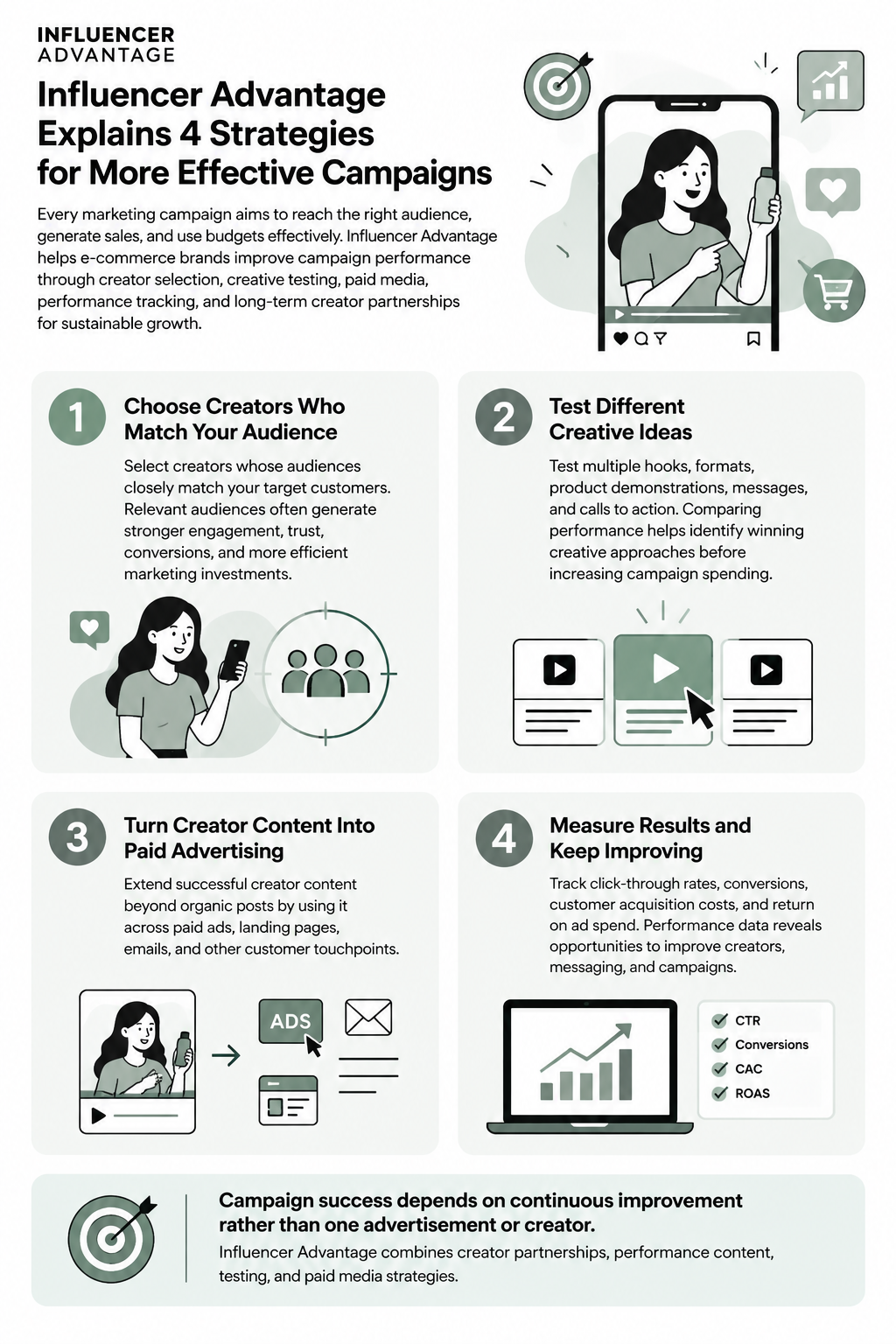
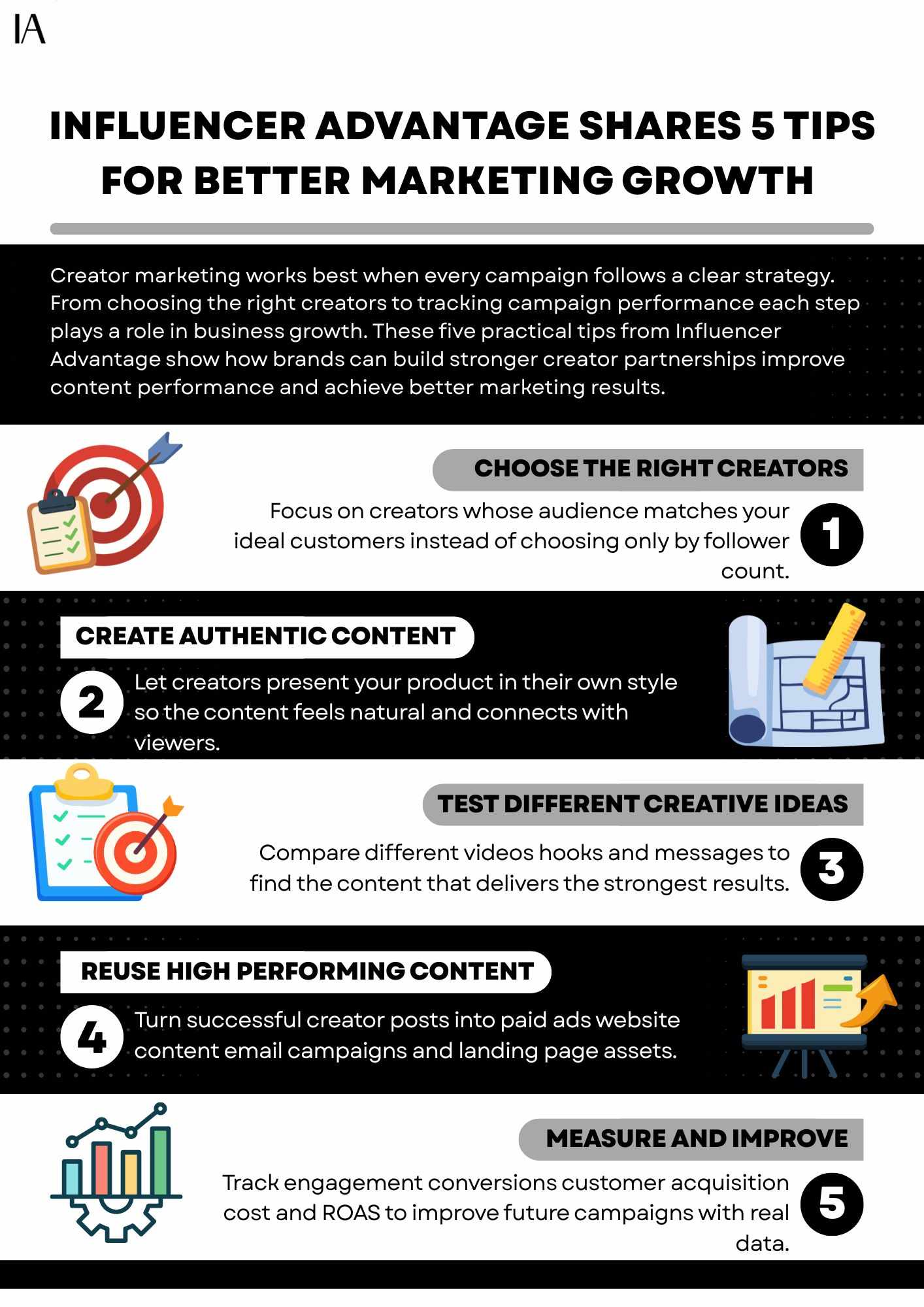
The biggest shift is in what gets measured. The industry is moving past likes, comments, and impressions toward numbers a finance team actually cares about: customer acquisition cost, return on ad spend, and revenue. That view lines up with what is happening across the wider industry.
According to Forbes, brands now earn roughly $5.78 back for every dollar spent on influencer marketing, yet close to 30% still don't formally track that return. At a scale of hundreds of thousands of creators, that gap closes fast. Tracking stops being optional and becomes the only way to know which partnerships are genuinely worth keeping.
The Numbers Behind the Network
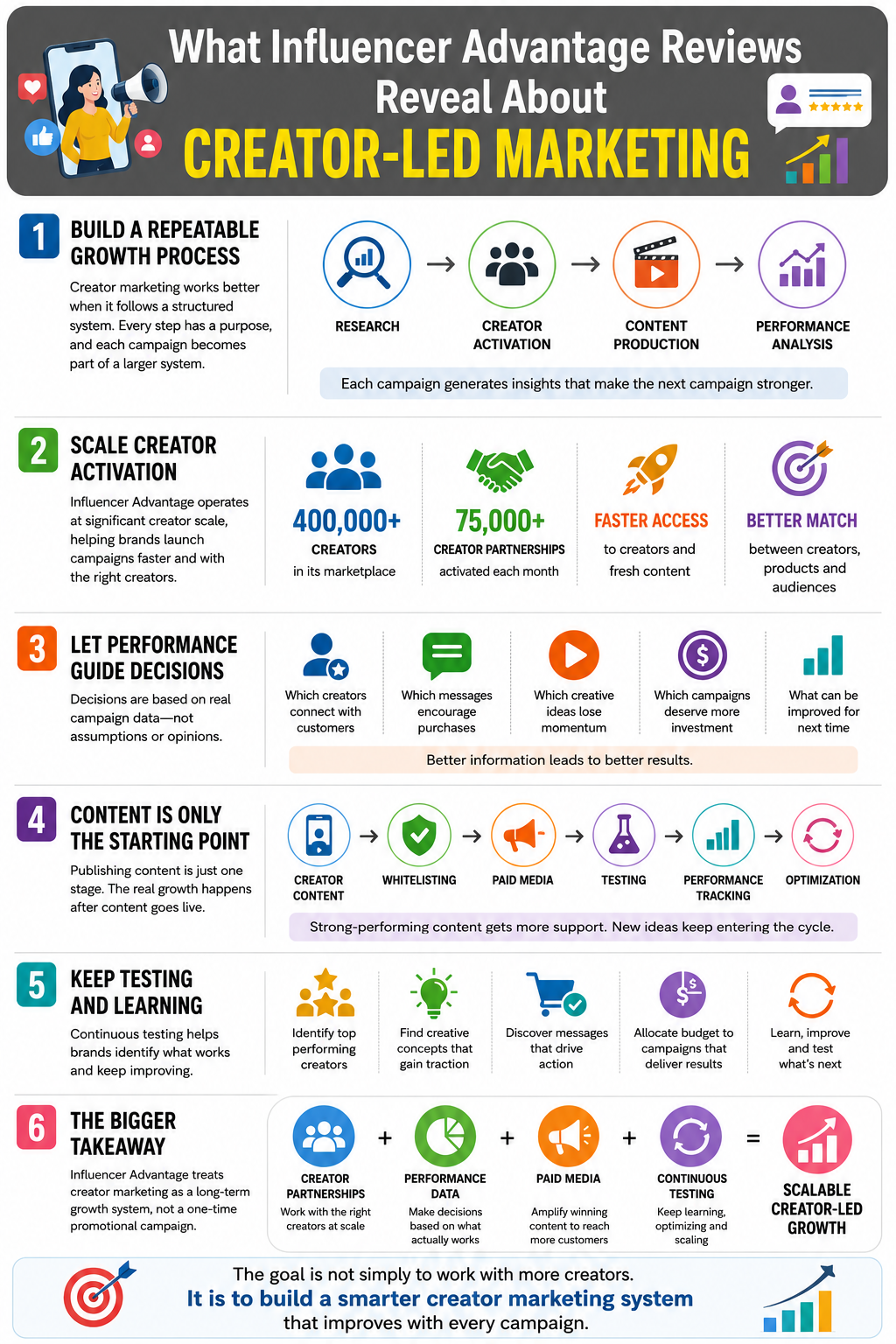
The scale itself is worth sitting with for a moment. Influencer Advantage currently works with more than 700 active brands and manages upward of $850 million in annual advertising spend. Every month, it activates roughly 75,000 creator partnerships and produces more than 200,000 pieces of performance-focused content.
Numbers like that only matter if they translate into results, and that's really the point. Instead of a brand betting its whole budget on a handful of well-known names, spend gets spread across thousands of smaller creators, tested and measured in real time, so decisions are based on what's actually converting rather than who has the biggest following. That kind of volume is what makes fast testing possible, instead of waiting months to see if one campaign worked.
Testing Many Creators Instead of Betting on One
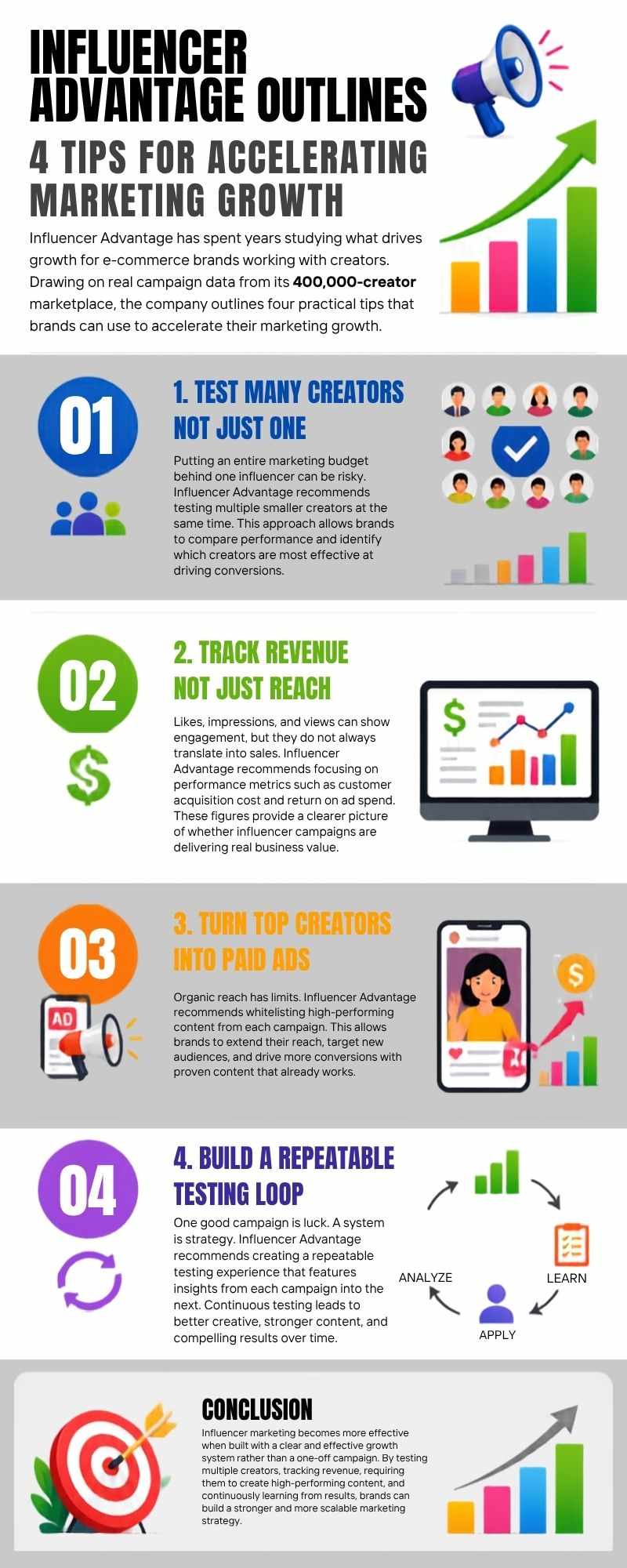
This is where the model breaks from how influencer marketing used to work. Rather than searching for one creator to carry an entire campaign,The company builds diversified creator programs, testing larger groups at once across different messages and formats. That approach fits a broader pattern.
A Sprout Social report on how brands benchmark creator performance found that marketers now lean heavily on engagement metrics and real traffic, not raw follower counts, when judging whether a partnership actually worked. If a handful of creators underperform in a pool this large, it barely matters, because thousands more are still converting quietly in the background. It's a numbers game, but a deliberate one, built to keep any single bad guess from costing too much.
A Repeatable System, Not a One-Off Campaign
Influencer Advantage's founder, James, summed up the shift simply: "the conversation is no longer about finding one creator with the biggest audience." Instead, the company runs what it calls a Creative Strategy Flywheel, moving from customer research into creator activation, content production, paid amplification, and performance analysis, then feeding those results back into the next round of testing. Every campaign is meant to make the next one smarter, rather than starting over from scratch each time a new product or offer needs promoting.
What the Rest of the Industry Shows
This isn't an isolated approach. GRIN, whose own creator network includes more than 700,000 verified creators, points out that a marketplace of this size gives brands access to nearly every niche, tone, and content style, something a handful of exclusive deals could never match. And Ahrefs has openly shared that it spent more than a million dollars sponsoring hundreds of creators, learning firsthand how much creator selection and long-term relationships matter more than one-off deals. Different companies, same conclusion: real scale tends to beat a handful of one-off bets.
The Balance Still Required
Data and testing cannot replace the human part of this equation entirely. Authenticity alone is not enough anymore, but neither is data alone. Real people still make the content, while performance numbers help determine what deserves more budget.
That balance matters because audiences notice when a post feels like a checklist item instead of a genuine recommendation. It is one of the hardest parts of this model to get right and one of the easiest to lose as a program grows. Brands that pair strong tracking with creative freedom for their creators tend to outperform those that treat every partner as interchangeable.
The Bottom Line
Treating 400,000 creators like a performance marketing network changes nearly everything about how a brand operates. Measurement becomes precise instead of optional. Spend gets tested across many smaller creators instead of resting on a few big names. And a company like Influencer Advantage shows what that looks like at real scale: hundreds of active brands, hundreds of millions in ad spend, and tens of thousands of creator partnerships running every single month. The brands getting this right aren't choosing between data and authenticity. They're proving both can grow together, at real scale.




Write a comment ...